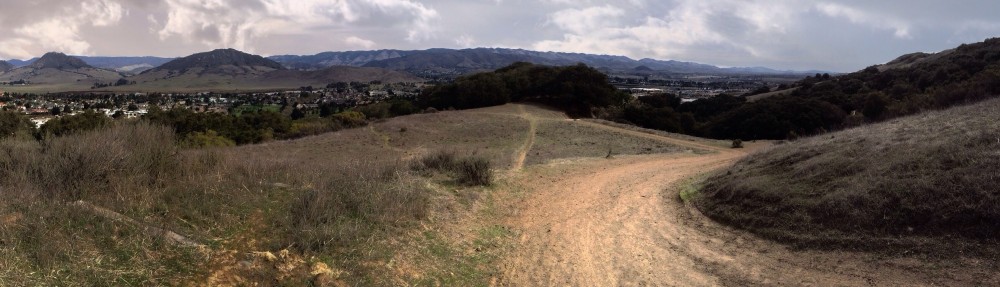
When I was 13, I had the privilege of spending five wonderful weeks in Italy, in the delightful little town of Vettica, where my uncle was born and grew up. He had married my mother’s oldest sister and the two of them, with my cousin in tow, returned to his family home every summer. That year they took my older brother and me along with them.
I could write volumes about my time there, because it was such a pivotal experience for me on so many levels, and left a huge impact. Just two examples: I finally learned to swim; and, thanks to my aunt’s fascinating “bedtime stories/lectures”, I developed an interest in linguistics which inspired me to study Latin in junior high and high school, and various language/linguistics classes in college. Mostly, my time there was hugely enjoyable, despite getting rather ill. Even then, I was doted on by my uncle’s sister and extremely well taken care of, so my brief “suffering” seemed not much at all. It was mostly an idyllic time, full of feasting and swimming and fascinating places and wonderful people who treated me like visiting royalty.
But I’m writing about my faith journey…
Before going to Italy, my experience with and understanding of Catholicism was minimal. I knew schoolmates who observed meatless Fridays and vaguely knew it had something to do with their Catholic faith. From somewhere I’d gotten the idea that Catholicism was old and traditional, which made me think it should continue on without change, so I was strangely upset about the Mass no longer being in Latin. At the same time, I really had no idea what the Mass was and had zero interest in the Latin language, so I’m not sure why this mattered so much to me. (What can I say? I was a weird kid.) My father had befriended a Catholic priest during his first pastorate; apparently the two of them were the only ones, in a local group of mostly theologically liberal pastors, who “really believed the Bible”. That gave me a rather positive impression of priests. So did watching Bishop Fulton Sheen on TV a few times. A story I’d read about Italian immigrant families made the very idea of midnight Mass at Christmas seem so wondrous that I wished we observed something similar. I’d come to the conclusion that, for the most part, Catholic Churches appeared — from the outside at least — to be more beautiful and “churchy” than their Protestant counterparts. And that’s about all I knew.
Then I went to Italy.
Catholicism was woven into the very fabric of everyday life, and I was exposed to things that, frankly, bewildered me. I saw statues of Mary everywhere, it seemed, and statues of village patron saints paraded about in processions and celebrations. At one point, I blurted out something to my aunt about idolatry.
“You ignorant little girl,” Tante Lydia responded, somehow making the words sound loving rather than like an insult or rebuke. Then, ever the teacher, she proceeded to set me straight. I wish I could remember what she said, but my takeaway was that there was a vast difference between worshiping and celebrating or honoring, and that I was wrong to judge the hearts of people when I didn’t even understand their words, actions, or the real meaning behind them. The lesson about judging the hearts of others is one that, sadly, I have had to relearn over the years.
Weeks later, back in Germany, I made some comment to my grandfather about wondering why “real Christians” didn’t leave the Catholic Church. My Opa loved me dearly — in fact, for years I was convinced that I was his favorite grandchild — but he didn’t hesitate to rebuke me strongly for my prejudice. He had known many “real Christians” over his lifetime, he told me, and some of the most devout ones were Catholic. He trusted that they were exactly where God wanted them to be.

While in Italy, we attended the village church. This was 1971, and the Mass was in Italian. The priest, a relative of my uncle, helpfully loaned me an older German/Latin missal, cautioning me that the liturgy was not identical but that I would hopefully understand most of what was going on. So my first introduction to the Catholic Mass was reading a German translation of the Traditional Latin Mass during an Italian Mass! Unfortunately my German vocabulary wasn’t quite up to the task. I did come to the conclusion that a lot of it was prayer. In fact, it seemed to be mostly prayer, as far as I could tell.
I secretly found the priest fascinating. In public — as in whenever he was around the church or going out and about on the village street — he wore his cassock and carried himself with an air of sober dignity. During the Mass, I thought his voice was impressive and reverent. And then he would show up for an evening visit or to go out with the fisherman at night, dressed in a quite ordinary way. Yet there was still something about him…
I returned to America thinking that Catholicism in our country was of a very different sort. In many ways, that’s true. It was far less public. In Vettica, the children about to receive communion processed down the village street that was lined by all the rest of us, and I’d never seen anything like that at home. Faith in general, where I lived, seemed a way more subdued if not private thing, best kept within the walls of church and home, with the exceptions (like Billy Graham crusades or the Jesus Movement) being newsworthy. If American towns had patron saints, they were kept hidden away and never mentioned, at least as far as I could tell.
But I had to admit that there was something very special about the church as a center of village life, and about people seeming to take for granted that they could openly express and celebrate their faith anywhere and everywhere. And there was also something special about churches and traditions that went back hundreds upon hundreds of years. America always seemed so new in contrast, and I wasn’t sure that was entirely a good thing.
I often found myself longing for deeper roots, for a sense of belonging to something far greater, grander, and more enduring. Looking back now, I see so much of this as God planting seeds in my life and in my heart, seeds that would take decades to come to full fruition.
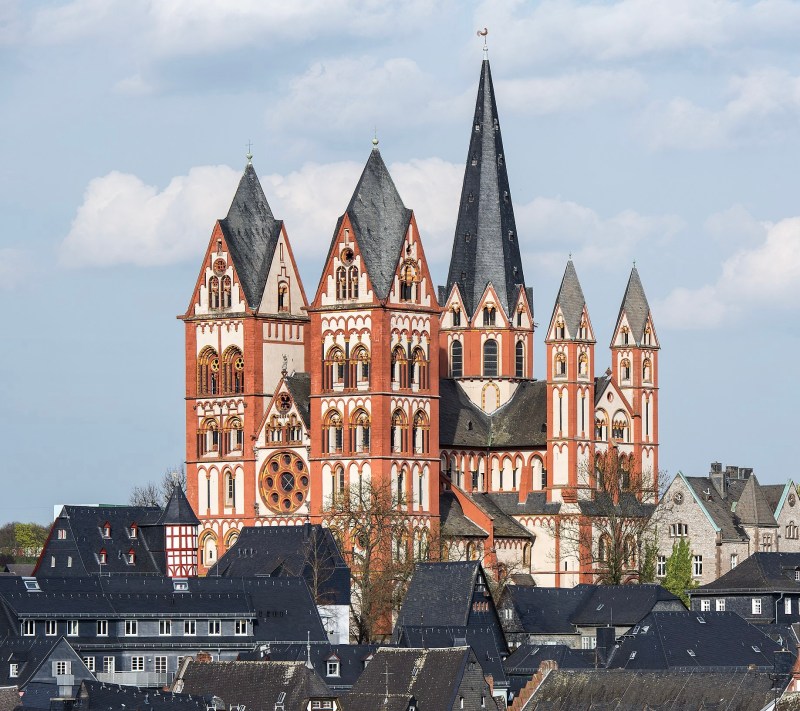
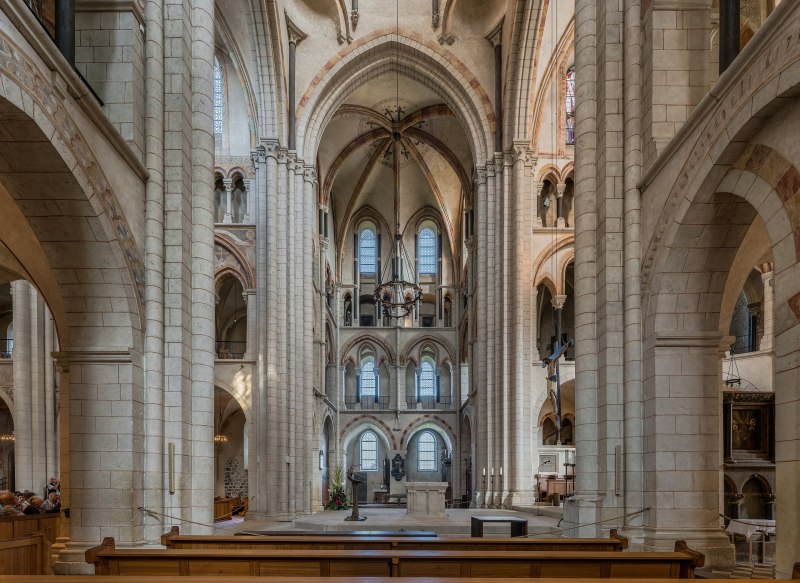


 Prone to wander...