Fashion Friday: how did I ever live without these pants?

I am probably almost the furthest one can get from being a fashionista. I do own clothes purchased in normal retail stores during this decade, even this year, and I have been known — on occasion — to clean up fairly well and don an outfit that was actually stylish. But for the most part, I’m oblivious to style trends, and dress mostly in what I prefer to wear. Oh, and I don’t dress age-appropriately.

Once in awhile, I’ll read a fashion/style article, and discover some Awful Truth, such as my tragic answers to screaming headlines such as:

  • Are You Stuck in a Fashion Rut?
  • Do You Wear Clothes From the Last Decade?
  • Do You Still Dress Like You Did in College?

The answers are apparently so, yes, and even worse, I still dress like I did when I was in junior high…

So this is the worst place to come for actual fashion advice.

That having been said, I just have to tell you about a pair of pants I got recently. I’ve been on a several-year quest for the perfect hiking pants, only to discover:

    • Hiking pants are ridiculously expensive.
    • Either I have large thighs (which I do) or women hikers all have thin thighs or the fashion trend in hiking pants is to be tight to the point of impracticality.
    • Too many hiking pants are made of techie fabrics I find hot and uncomfortable.

Then I discovered backpacking cargo pants by a company named Molecule:

image

These are so roomy, practical, and comfy that I am tempted to have them replace jeans as my wardrobe staple…but that might be venturing too far into fashion no-no land even for me.

What guilty pleasures lurk in your wardrobe?

Spelling, Indoctrination, Public Schools, and Internet Debates

As a child, I was an excellent speller, but I hated the subject of Spelling. It was hideously boring, being forced week after week to engage in the most mind-numbing exercises designed to teach me to spell words I already knew how to spell.

In second grade, my frustration caused me to rebel. I began using words in my spelling sentences designed to show how ridiculous it was that I should be pretending to be “learning” anything. For the word “colors”, I used my new favorite word: “The colors in that painting,” I wrote, “were stupendous.” At every opportunity, I threw in the spelling and vocabulary words that I was learning, at home. My attempts to get my teacher to see the error of her ways failed miserably.

In third grade, I would try to force my sentences into stories — not at all an easy task. That teacher didn’t see the light either.

By fourth grade, I gave up. I can remember listlessly scrawling my homework in my spelling workbook day after day. Apparently my scrawling was so atrocious that it outraged my teacher, who called my parents, with the result that I was forced to copy everything into a fresh spelling workbook, only using far neater penmanship. There was a bright spot in all this: in addition, I was finally freed from the tyranny of the spelling curriculum and allowed to create my own spelling and vocabulary curriculum in its place. (Hey, it was the 1960’s.)

I wasn’t necessarily that “gifted” in all my subjects.

As an adult, I have been diagnosed with the inattentive type of ADHD. It has made me wish I could run back to all my teachers, wave the results of four grueling hours of testing in their faces, and insist, “See? I wasn’t lazy, or careless, or stubborn, or stupid! And there was a damned good reason I wasn’t always paying attention!” Some kids, as frustrated as I often was, act out. Some give up entirely.

I was a quiet rebel. One example: on the last day of my tenth grade creative writing class, the teacher asked in an offhand sort of way while dismissing the class, “If anyone has any suggestions to improve this class…?” and I whipped out a spiral notebook and left it on her desk.

That notebook was how I’d vented my anger at having a teacher suck the life out of the thing I did that gave me the greatest satisfaction in life. It was my ideas on how the class should have been taught. Actually, it was far more than that. It was a course outline, with goals and objectives — and almost a full semester’s worth of lesson plans and assignments.

Of course it was wasted on her, and I knew it.

Oh, and by the way, all of my former teachers who used to tell me that I just needed to work harder? You have no idea how hard I worked in your class.

From second grade onward, I was observing, critiquing, analyzing, and silently resisting. I saw the injustices of the system. I saw the absurdity. I saw the emptiness and futility — even at excellent schools with excellent teachers. It was a box. It was a prison.

School robbed me of joy. It crushed me. But I refused to let it destroy me.

And years later, when my first child approached school age — a child who “learned differently” and would have had to have been diagnosed, labeled, and drugged in order to fit into an elementary school classroom — I swore that no child of mine would be served up to the institution until they were mature and strong enough not to emerge as wounded as I was.

I don’t think public school is evil. I don’t think teachers exist to make children’s lives miserable. I had some excellent teachers, whose memories I cherish. (Come to think of it, the really good ones were renegades and rebels themselves.)

In fact, I think many students are well served by the public schools.

But most of you…of us…have been indoctrinated. Unless we have ever questioned the system — and I mean far, far beyond, “Why do we have to take this class?” and “Waah, waaah, that teacher grades so unfair” — we have been indoctrinated. Unless our public school teachers taught that alternative forms of education (some of which look nothing like our notions of “school”) are just as valid if not more so than our education, unless they had us reading authors like John Holt, unless they encouraged us to question whether we really belonged in public school — we have been indoctrinated.

Some of us fought it better than others. Some of us eventually woke up and saw the system for what it is. As long as we think that government-funded institutions of learning are somehow neutral, indoctrination-free zones, where every teacher, administrator, and textbook author has the amazing ability to remain free from personal biases or agendas — we are still drinking the koolaid.

All this came back to me during a recent Facebook debate which, I’m told, finally degenerated into correcting someone’s spelling.

A note to my readers: I have been dubbed The Typo Queen. The spelling brain cells of my youth seem to be vanishing rapidly. In addition, I’m close to being world’s worst proofreader. So feel free to offer me any and all corrections. You would be doing me a service.

But don’t make the mistake of thinking that poor spelling means poor reasoning, or that your spelling prowess makes you somehow superior in intellect. If that’s what you think — or if you think odd grammar, lack of a college degree, and poor proofreading abilities makes someone “uneducated” — you need to get over your indoctrination. Learn about multiple intelligence theory. Face your bigotry and prejudice. Don’t try to squeeze the whole world into your institutional schooling box.

More Amazing Glimpses Of Our History

My thoughts to follow…

theed's avatarTHE EDITOR'S JOURNAL

18-Construction-of-the-Berlin-wall-1961 The building of the Berlin wall.

22-Suntan-vending-machine-1949The obsession with fake tan is a long one. A tanning vending machine 1949.

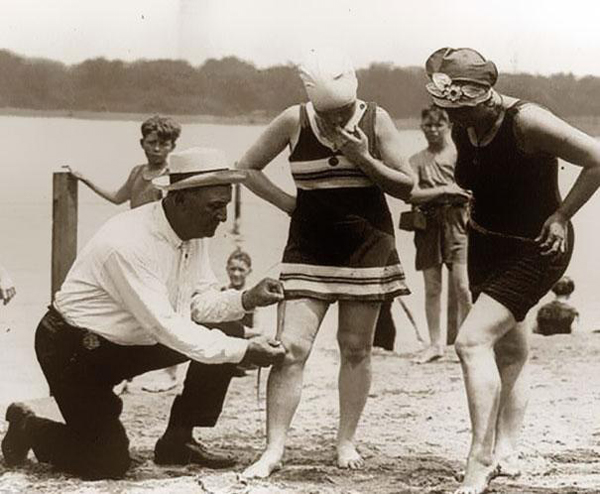
23-Measuring-bathing-suits-if-they-were-too-short-women-would-be-fined-1920sThe continued obsession with women owning their sexuality is also a long one, as this man ensures that these women are not precious millimetres into the indecency zone.

24-Martin-Luther-King-with-his-son-removing-a-burnt-cross-from-their-front-yard-1960Martin Luther king cleans up after some ‘rowdy’ locals the next morning.

26-Lifeguard-on-the-coast-1920sBaywatch circa 1920’s

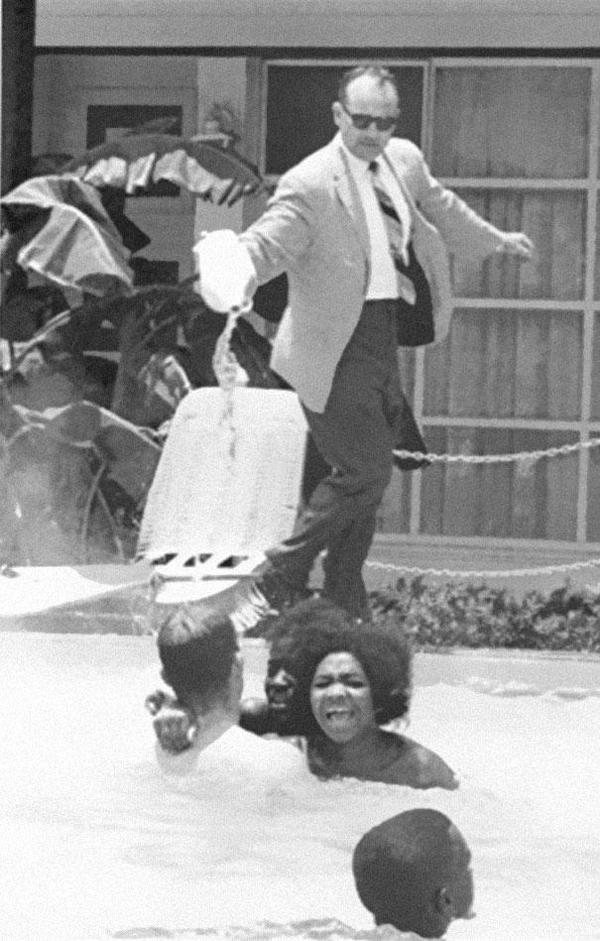
25-Hotel-owner-pouring-acid-in-the-pool-while-black-people-swim-in-it-ca-1964This man extends his hospitality to a Black family taking a swim by pouring acid into the swimming pool and forgetting to ask them to get out first. 1964.

View original post

Preaching to myself: faith and politics

I posted this to a thought-provoking discussion on Facebook:

As we were driving to San Diego for an optometry conference today, we were talking about this issue of Christianity and politics. Unfortunately, we didn’t have time to come up with the definitive answer or solution to all our nation’s woes. OK, I’m joking about that last part, but here are some of my thoughts:

1. We can’t look for political solutions to spiritual problems.

2. At the same time, we can’t use that as a cop-out. Political solutions make a HUGE difference — look at the abolition of slavery as a result of men like William Wilberforce working within the political system of his day.

3. Too many Christians (and I’m pointing a finger at myself) have failed in BOTH arenas: spiritual and political. Yesterday was the National Day of Prayer and I didn’t even know about it until last night. I’m not the most informed voter. I’m not writing letters to my representatives or even praying for them as seriously as I should.

4. Too many of us (me too) are lazy, soft, and selfish.

How are we doing on the spiritual battle front? The typical “prayer breakfast” has food, speakers, music — and very little actual prayer. How many of us are on our knees, repenting for our own sins and failures first, and then humbly pleading with God on our nation’s behalf — and refusing to give up? How many of us are allowing God to lead us? How many of us are standing up for true justice and asking God to break our hearts over the things that break His?

How are we doing on the political front? I’m sorry, but sometimes we — as Christians — act and look like idiots. The majority of us don’t even bother voting. We major in the minors and get our knickers all in a twist over stuff like whether the 10 Commandments can be displayed in public schools. We are uninformed and spout off in ignorance…yeah, and I’m looking at myself in the mirror right now. We render ourselves ineffective.

You are right, Isaac, that God in His Providence has placed us here, in this time and place. He has a different calling on each of us. But He has also placed us in positions of stewardship, with responsibilities, rights, and privileges. Am I a good steward of my American citizenship?

At the end of our lives, will we have made a difference? Will we have allowed God to use us for good or will we have wasted our time and talents? Those are uncomfortable questions for me. But I need to ask them of myself…and I need, more importantly, to seek God’s answers.

Sorry if this seemed like a sermon…

I am thankful for the son who started this discussion. He has never shied away from asking hard questions…starting when he was only two. I kid you not. And he’s never been satisfied with easy answers.

So here I sit, with more questions than answers. I’m reminded of that verse: “If any of you lack wisdom…”  If? It’s not a question of “if” — I lack wisdom. Period. God help me. Guide my thoughts and deeds. Use me.

“For if you remain silent at this time, relief and deliverance will arise for the Jews from another place and you and your father’s house will perish. And who knows whether you have not attained royalty for such a time as this?” (Esther 4:14 NASB)

Who knows whether we have been born for “such a time as this”? Will we have the courage of Esther to say, “If I perish, I perish”? What is my life really worth if it accomplishes nothing of lasting significance?