Purity: it’s not what you think | Preaching to the choir

Purity is not what most purity advocates think it is.

But, before we get to that, it’s time we admitted that there is a lot of immodest behavior going on among those advocating modesty and decorum. For women claiming “freedom from boastfulness” and “behavior, manner, or appearance intended to avoid impropriety or indecency”, there is way too much “Look at me! I am so modest! And I’m hottest!”


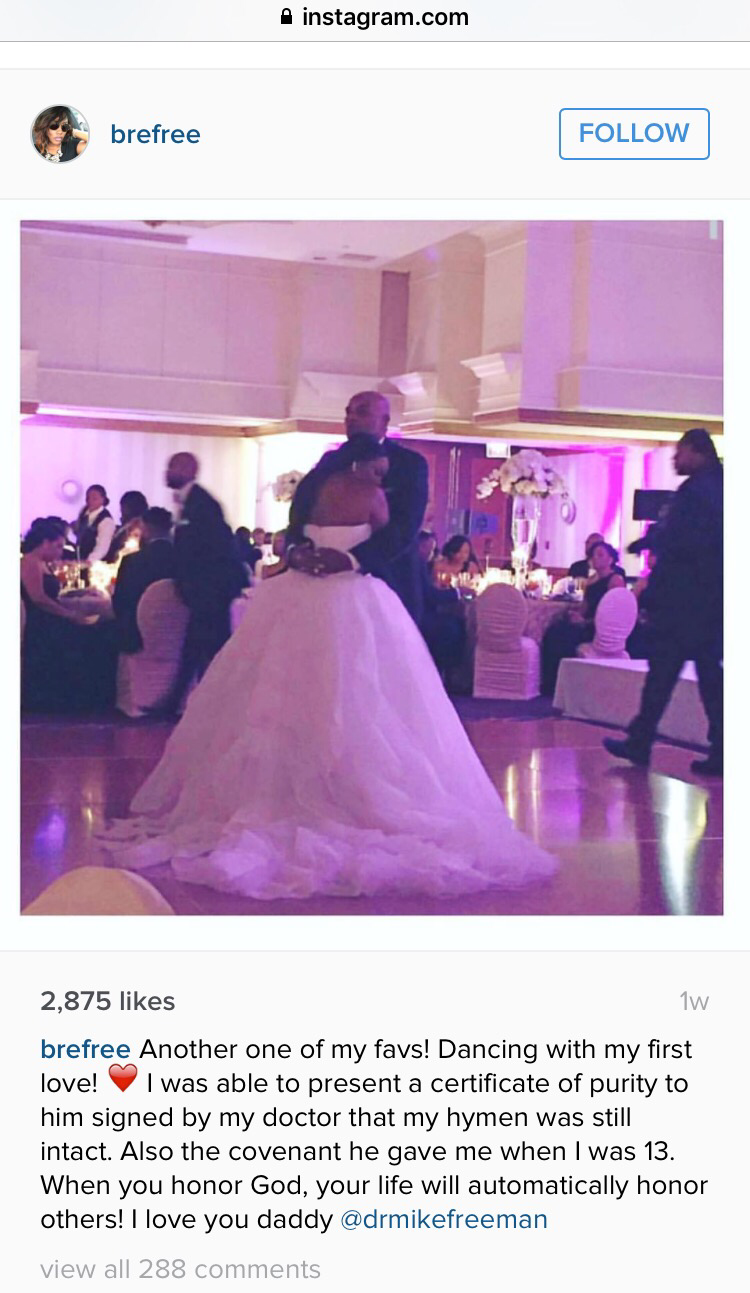
That brings us to immodesty under the guise of “purity”. A young woman who describes herself as a “preacher of purity” wants the entire world to know the results of her premarital gynecological exam, or at least the condition of the part of her sexual anatomy she wants to boast about.

This isn’t my first post about “purity culture” (see The problem with “purity culture” is not purity and “Purity Culture” doesn’t really understand purity) and I don’t want to belabor my previous points. However, there is one thing I would like to urge everyone, especially “preachers of purity”:

Stop using “purity” as a euphemism for “virginity” or “intact hymen”. STOP. The words do not mean the same thing.

To be graphic, I once met a girl who was safeguarding the intact state of her hymen but bragged to me that she had lost count of how many boys and men she had given blow jobs. She could have given her father a “certificate of virginity” on her wedding day, but there was more than one young men at her wedding who — from personal experience with her — would have snickered at the very idea that the “Blow Job Queen” ever possessed even a hint of purity.

Why am I so opposed to equating virginity with purity? It’s not just because I grew up in the era of “technical virgins” who did “everything but”. It’s not because, as some legalists might accuse, I “hate purity”. In fact, it’s because I value purity so much that I don’t want to denigrate it, reduce it to something that it isn’t, or render it meaningless.

Face it: there is no physical marker of purity. 

I might as well confess up front: I believe in original sin. To me, this means that we live in a fallen world and have a bent towards selfishness and sin. While most girl babies are born with hymens and all babies are born in a state of innocence, I do not believe we are born possessing “purity”, and that we lose this the instant — to put it bluntly — a penis breaks our hymen.

The sad truth is that we all sin and fall short of the glory of God. And the avid sex-obsessed reader of steamy romance novels cannot claim “purity” and moral superiority because of her virginity any more than the person who indulges in masturbation, porn, or plain old lust — even if these people have not as much as held hands with a member of the opposite sex, they have still sinned sexually.  After all, Jesus spoke against sins of the heart, and warned against being whitewashed sepluchres, all clean on the outside but filled with sin and death. Purity is a state of the mind, heart and soul far more than it is a state of the body.

And it’s not just about sex either, as we learn in ‭‭1 Corinthians‬ ‭6:9-11‬:

“Or do you not know that the unrighteous will not inherit the kingdom of God? Do not be deceived: neither the sexually immoral, nor idolaters, nor adulterers, nor men who practice homosexuality, nor thieves, nor the greedy, nor drunkards, nor revilers, nor swindlers will inherit the kingdom of God.”

Ever been greedy? Ever reviled — criticized in an abusive or angrily insulting manner — anyone? All of the boasting in the world over your intact hymen will not help you inherit the kingdom of God.

But here’s the good news:

“And such were some of you. But you were washed, you were sanctified, you were justified in the name of the Lord Jesus Christ and by the Spirit of our God.”

That is the gospel. It’s about Jesus far, far more than it is about us.

Contrast this with a post from the enthusiastic but sadly misguided young bride:

“Still enjoying my amazing honeymoon, but just saw this! Only the beginning! Thanks for all your support on social media over the last couple of days! We will continue to push & celebrate our decision. Thank you for helping us push a positive message! If one person has made a decision to wait until marriage or decide to stop & wait we have done our job! Let’s make Jesus famous! -Mrs. B #meetthebowmans#purity #livingmybestdays”

We don’t “make Jesus famous” by boasting about our intact hymens: “See? See?! I’ve got proof from a doctor!! Look at me! Look at me!!” We make Jesus famous by talking about what He has done, not by bragging about which particular sex acts we avoided before marriage. We make Jesus famous by not hogging the limelight. We make Jesus famous by pointing to Him instead of ourselves. We make Jesus famous by telling the truth about purity: it’s all because of Him, not us.

As the Apostle Paul wrote, “But far be it from me to boast except in the cross of our Lord Jesus Christ, by which the world has been crucified to me, and I to the world.” (Galatians‬ ‭6:14‬)

He also wrote, “For I decided to know nothing among you except Jesus Christ and him crucified. And I was with you in weakness and in fear and much trembling, and my speech and my message were not in plausible words of wisdom, but in demonstration of the Spirit and of power, so that your faith might not rest in the wisdom of men but in the power of God.” (‭‭1 Corinthians‬ ‭2:2-5‬)

None of us are pure. We all need washing. Some might have the sort of obvious sins and stains that make us look dirty to others. The road to true purity — being washed clean by Jesus and, increasingly, sanctified and set apart for Him — is, paradoxically, often far easier for us “blatant sinners” than for those with hidden or socially acceptable sins and stains. Far too many of the outwardly “good” might give lip service to God’s sustaining grace (“Let’s make Jesus famous by talking about how pure I have kept myself!”) but pride, judgmentalism, and self-sufficiency often blind them to the seriousness of their unholy and lost condition. Their faith rests too easily in themselves.

Thank God that His grace is sufficient for every sin and that His mercy extends even to those who do not fully comprehend how desperately they need Him. May their eyes be opened so that they will stop boasting in their flesh…whether they are boasting about their good deeds, the sins they didn’t commit, their circumcision, or their intact hymens. May even the most prideful and arrogant of boastful brides repent of her sin and learn to put her faith in God, and Him alone.

**********************

For a follow-up post, read here.

Why it’s neither kind nor helpful to respond to PTSD sufferers with “grow up” | Trauma Tuesday

Recently I watched a video which I don’t care to identify or link to, because I don’t want to to carelessly indulge, even in the slightest way, a possible attention glutton. Besides, this really isn’t about that particular person; it’s about an attitude he shares with far too many other people.

But before I get to that, let me offer my thoughts and understanding of what it means to be “triggered”. I may step on a few toes here, and I want to make it clear that I am speaking for myself and not for all survivors.

For those unfamiliar with PTSD, or needing a quick review, here is a fairly concise explanation. When those of us who suffer with PTSD talk about being “triggered”, we tend to mean that something brought on an episode of emotional and physical PTSD symptoms. In other words, we were forced to relive our trauma. Maybe it was “just” that our emotions, heart rate, endocrine glands, and nervous systems reacted as if the trauma were happening again, right at that very minute. Maybe we dissociated. Maybe we had a flashback, during which our bodies and minds were convinced the trauma was happening again. Maybe all this was followed by night after night of terrorizing nightmares, and days of anxiety, during which we constantly felt as if about to jump out of our own skin, until we were utterly exhausted and spent.

What we experience can be far, far worse than I am describing.

If you have ever undergone something truly horrific, devastating, life threatening, or terrifying — torture, a violent assault, a particularly frightening accident, or something similar — you no doubt remember how you didn’t just “get over it” the instant things stopped. Even if you didn’t end up with PTSD, you felt shaken and distressed for quite some time. When those of us with PTSD are triggered, we don’t suddenly feel back to normal once we realize, “Haha, it wasn’t a real threat after all, and my nightmarish assault wasn’t happening all over again! Silly me!” (No, I don’t think it’s silly to be triggered. Nor is it a sign of weakness or fragility, despite what some may think.) It can take us a while to recover, and for our bodies, instincts, thoughts, emotions, hormones, digestive systems, cardio-vascular systems, brain chemistry, and nerves to catch up with present reality.

Now I realize that not everyone uses the word “triggered” in that way. Some non-survivors have co-opted it for their own use. However, when they say they are “triggered”, they mean that they are reminded of something sad or painful. A smell of perfume may prompt someone to feel grief over the loss of their beloved grandmother, or even to remember her death quite vividly, but that is part of almost everyone’s life in our world. Remembering and being upset over bad memories is a far cry from feeling like you have been pulled back into and forced to relive the most traumatizing, dehumanizing, terrifying experiences of your life. When those of us with PTSD are triggered, it’s as if our trauma is happening all over again. Past and present collide.

At the risk of offending survivors who disagree with me, I think the word may have been misused and overused by some of us. But, whether I am right about that or not, the thing we need to remember is that we are all at different places in our healing journey, and we all have different triggers. So we should be careful not to judge or belittle other survivors for being triggered “more easily” or by different things. (And, yes, mere words can be triggering.)

To make things more complicated, what might be triggering one time may not be triggering another time. It’s the seemingly unpredictable nature of PTSD that made many of us feel like we were teetering on the edge of “going crazy” until we were finally diagnosed  and given tools to help cope with the aftermath of our trauma.

Many of us in various survivor communities become fiercely protective of one another, not because we view each other as fragile, but because we place such a high priority on healing. Part of that process is learning self-care, and “trigger warnings” are a way of helping each other with that. My friends and I don’t avoid using the word “rape” or talking frankly and even graphically amongst ourselves, often to a far greater degree than we can with most non-survivors. However, if we are heading into potentially difficult territory, we will caution each other along the lines of, “Make sure you are in a good place, and be prepared, before you read this…before you watch this movie…before you go to this place…before you listen to what I am about to say…” In other words, we’ve got each other’s backs.

My healing journey has involved a lot of hard, painful work on my part. I was blessed with a wonderful therapist who shares my faith, some amazing survivors I call my “tribe”, and some truly remarkable people who have loved, encouraged and taught me along the way. Some of those people have done so in person, and others through books, art, music, sermons, and the online world. Most of all, it has been the grace of God and His love as my Heavenly Father that has brought me to where I am today. I am thankful that things that used to trigger me no longer do. In fact, it’s been quite some time since I’ve had any noticeable symptoms of PTSD, depression or anxiety. Even the recurring nightmares are gone, as are the flashbacks. I’m able to go places, do things, and minister in ways that would have been unthinkable as recently as two years ago. (I’m hoping my symptoms are gone forever but recognize that may not be the case.)

I didn’t suddenly “grow up”. It was a long, hard road to get here, and the people who dismissively urged me to “get over it” were not only unhelpful and unkind — I believe that the enemy of my soul tried to use them as roadblocks to my healing. After all, the Bible says that Satan came to kill, steal, and destroy. He hates having his damage undone. He hates redemption and reconciliation. He hates God.

Does that mean I think that anyone who fails at loving survivors is someone who hates God? No. However, as I used to tell my kids, when we don’t treat others with love and compassion, it’s as if we are playing on the wrong team in this battle of good versus evil.

In my more idealistic days, I used to think that if I could just explain this sort of stuff, people would treat trauma survivors with more compassion. I saw the main problem as a lack of knowledge. Perhaps I’m becoming cynical, but I’m realizing that more and more people simply do not care — and that includes some of the very people who should be setting the examples for compassion, gentleness, and kindness. Sadly, not everyone wants to love as Jesus does…or maybe they just don’t want to love us that way.

That brings me back to the video that inspired this post. In it, a man mimics and ridicules those who say, “That’s triggering”, and responds with a dismissive smirk, “Well, grow up.” I fully recognize that there are people who, while they are right to value freedom of speech, mistakenly think it should be best expressed and protected by saying anything they want, no matter how cruel or offensive, and refusing to be held accountable or to apologize. I know all too well that there are people who mock the very idea of compassion and who accuse anyone encouraging kindness and gentleness as being overwrought and overcome with emotions. I know that there are men who will grow irate if anyone objects to their “jokes” about rape, and that there are people who seem to make a sport of threatening, intimidating, mocking, and harassing sexual trauma survivors. I know that there are also people who aren’t malicious, but are simply lacking in empathy. I know that there are some people who mean well, but are unfortunately clueless and oblivious.

To be clear: I’m not arguing that we should legislate away free speech or legally mandate trigger warnings. To put it another way, as much as I might feel like outlawing shock jocks and blasphemers, I’m not sure I’d like to live in a society (at least not here on earth) where they are outlawed. At the same time, of all the things I’m willing to advocate for, being an insulting jerk without being called out for it is certainly not one of them.

And, I’d like to add, if you are going to insist on being an insensitive clod, please confine yourself to a line of work where that is an asset and not a liability. In other words, stay out of the helping professions and out of any sort of ministry where people might actually think you are supposed to represent Jesus. (Perhaps, if you are that fond of and prone to offensive speech, consider becoming a shock jock. Then my friends and I will know not to listen to you.)

It seems that I can’t bring myself to end this post without including my two favorite stories about PTSD.

The first one was told to me by a Viet Nam vet. After a tour of duty, he was taking an afternoon nap at his grandparents’ house when something triggered a flashback, during which he ran outside and shot up the backyard. His grandfather had been watching the whole scene from his easy chair. I suppose some would think that the grandfather should have, at the very least, urged, “grow up!” But he was himself a combat veteran, having fought in World War 2, and he understood what used to be called “shell shock”. Very calmly he asked, “Well? Did you get ’em?”

“That’s why I loved my grandfather so much,” this tough former Marine told me years later, his eyes shining with tears. “He understood. I shot the heck out of his nice backyard and he never said a word about it…just sat with me and calmed me down.”

My second favorite story is one I read in a book somewhere, and it also involved a Viet Nam vet. He was at the dry cleaner’s when a car backfired out front. Next thing he knew, he was face down on the floor. To his surprise, so was the young woman who had been waiting on him. Rather sheepishly, he said, “Saigon,” followed by the year he had been there. She nodded and replied, “Beirut,” followed by the year she had left. They both got up, brushed off their clothes, and tried to go on as if nothing out of the ordinary had happened. (And, by the way, I’m fairly certain neither of them urged the other to “grow up”.)

Maybe it’s because I have a weird sense of humor, but both stories crack me up…at the same time that I find them sweet and endearing. Those of us with PTSD, whether our symptoms are in the past or not, want what most people want — compassion and understanding. We are glad when those things are extended to other trauma survivors, and disheartened when such human kindness is withheld.

There was a time, some years back, when I felt compelled to explain to someone why I had an overreactive startle reflex, why I was hyper-vigilant in certain settings, why I acted “wacky” sometimes, and why I had a weird set of “quirks”. I offered this explanation: “You know how some people who fight in wars get PTSD? Well, I fought in a different war, a private one, and I lost.” I didn’t want pity, or to be treated with kid gloves. What I hoped for was understanding: I’m not this way on purpose. It’s a boatload of fear and pain that caused this. If I could be any other way, trust me, I would. 

It’s always a risk when we disclose the trauma in our past. We don’t always know what to expect. Sometimes we get a dismissive, “well, grow up!” — or far worse. Sometimes we get shrugs. Sometimes we get awkward silence. Sometimes we get a “me too”. And sometimes we get someone who views us as their neighbor and loves us, as much as humanly possible, the way Jesus taught.

That last type of person? They are the ones who God can use to “bind up the broken-hearted” and to “comfort those who mourn”. They are the ones who do what the Church should be doing. They are the ones who help us heal.

And they are the ones who would never dismiss a PTSD sufferer with, “Well, grow up.”

It’s so much fun to have enemies

…especially if you are on a crusade. In fact, then you need enemies. It doesn’t have to be a real crusade; it can be one of your own making, or one confined to your overwrought imagination. Or it can be a cause, a church, a group, a system of theology.

Imagine a crusade without enemies. What if you embarked on Your Great Cause, and no one opposed you? After awhile, in order to go on feeling brave and important, you would have to create enemies, because crusades require battles, and battles require foes. See that guy over there? He isn’t as enthusiastic about my cause — he may have even yawned once during one of my speeches — obviously he’s not for me wholeheartedly so he’s my enemy! And those people have their own cause instead of mine, so they must be enemies! And that woman complained when I spilled coffee on her child, so she has proven herself an enemy of The Cause! And he asked me a question that I didn’t like, so he’s an enemy as well!

Once you have enemies, you can vilify them, lampoon them, and mistreat them at will because this isn’t a crusade anymore, it’s WAR! And once war has been declared, the actual Cause no longer really matters — it’s all about amassing followers, attacking and defending, forming alliances, maintaining your position of power, and defeating the enemy.

The only problem is that, to outsiders who aren’t playing along with your war games, you start looking a little like a crackpot. Your dramatic cries about being under siege begin to sound delusional and paranoid. Eventually helpful observers try to talk you down: Maybe people are put off by your bizarre behavior. Perhaps you should stop running around waving your sword everywhere. People have a point; you do say some wacky and offensive things. You really need to be more careful with hot coffee around children, and you need to apologize to the people you’ve burnt. But you are unwilling to admit that they are right, or that not everyone who points out your error is a mortal enemy. If you did so, you might have to admit that the entire war that has consumed your life is a false one of your creation.

Even worse, you might have to admit the deep, dark secret you don’t even want to admit to yourself. Behind all your bluster and posturing on the pretend battlefield is this terrible, gripping fear, the question you dare not ask: without your war, who would you be? perhaps just a nobody, like everyone else?

Ephesians 6:12 tells us:

For we do not wrestle against flesh and blood, but against the rulers, against the authorities, against the cosmic powers over this present darkness, against the spiritual forces of evil in the heavenly places.

These people you think are your enemies? They are not your enemies. You are fighting the wrong battle, against the wrong enemies, in the wrong way.

But, you protest, the Bible says that there are “enemies of the Cross”! Face it — you are not the Cross; you are not the gospel. Quit pretending to be anything other than the fallen, sinful, saved by grace — just like the rest of us — sinner that you are. And, even if the enemies of the Cross sometimes happen to be your enemies as well, remember Jesus’ words in Luke 6:

“But I say to you who hear, Love your enemies, do good to those who hate you, bless those who curse you, pray for those who abuse you.”

That doesn’t mean get all snarky and verbally abusive with them, falsely accuse them, malign their motives, demean them, mock them, or dismiss their legitimate questions and concerns. It means love…do good…bless…pray. Love them as much as you love yourself.

Of course that’s impossible for most of us. That’s why we need Jesus…and why we need the Holy Spirit to empower us to do the impossible.

If the people we think are our enemies are people professing to be Christian, if we love Jesus, we will want what He prayed in His high priestly prayer: “that they may be one even as we are one”. How dare we wage civil wars within the Body of Christ? And if our supposed enemies do not believe in Jesus, we should be doing our best to love them into the Kingdom.

May I never forget that.

Let the wars and crusades cease. Let the love of Jesus reign instead.

Kerckhoff Rats

An oldie but goodie…


Don’t worry; this story isn’t about rats. It’s really about friendship and about how coming to faith in Christ impacts relationships…and it’s about grace. Even though I wrote it some years back, I felt a sudden urge to share it with my readers. Grab a cup of coffee…let me know what you think.


Kerckhoff Rats

Kerckhoff Rats, Drew called us. The phrase sometimes still pops into my mind unexpectedly, and suddenly it’s as if I catch a glimpse of us then. The memories vary. Sometimes it’s Kweku drumming his fingers on the table and bobbing his head to the music, urging me, “See, you can do this, too—you can dance!” Or maybe it’s Drew reading some ancient German tome and chuckling to himself the way other college boys did while reading comic books. Or maybe it’s the way Mindy would walk in…it seemed almost choreographed. “She never stops dancing,” Kweku would say.

We certainly were there a lot, to the point that people could expect to find us at our usual table at the usual times, drinking our usual. Mine was almost always the whipped cream topped Cappuccino Royale, while Kweku and Drew preferred the strongest and blackest of coffees (“Make it like me,” Kweku would say) and Mindy’s choice was herbal tea. We had met there in the coffee house on campus. We were an odd assortment of unlikely friends, but we had become campus fixtures.

There was a certain ritual to much of what we did and how we interacted with each other as well as with our favorite campus haunt. Soon the Kerckhoff employees became part of that ritual. When Kweku would enter the coffee house, for example, one of them would inevitably put on a Stevie Wonder album. For Mindy, it would be Joni Mitchell. I would get a questioning look, to which I ritually replied, “I dunno. Ask Drew.” Drew had eclectic tastes which varied according to mood.

Once in awhile someone would wonder why the album playing would be cut off mid-song and replaced with another. Sometimes there were even protests, which would be met with the simple response, as if it explained everything, “Kweku is here.” Oh. Whatever…

It got so that the other regulars would know not to sit at “our table” in the afternoons. If someone wasn’t familiar with the unwritten reserved status of our table, an employee would let them know. “That’s Kweku’s table. You’ll have to get up when he or his friends get here.” We even called it Kweku’s table. It was by the window and offered the best view of the inside of the coffee house as well as a panorama of that part of the campus. It was also right in the line of sight of the door, so we could spot and flag down friends.

Some of my other friends would find me there and would end up puzzled. Were we two couples? And, if so, who was with whom? It struck the four of us as funny. Early on, Mindy had drawn me aside and warned, “Don’t get involved with Kweku. He loves us both now, but he turns on every woman he becomes romantically involved with.” Sometimes we met those women. Kweku never introduced us. We hated the way he treated them. To us, he was…well, he was Kweku.

Drew was a dreamer. At times Mindy and I felt motherly towards him, as if he still needed tending. To a certain extent, he did. There was a brief time when Drew and I looked at each other differently, as if we’d just had our eyes opened. We even went out on a pseudo-date and kissed good night at the end. It became awkward and we pretended as if the whole thing hadn’t happened. We never dared mention it to Mindy or Kweku but always suspected that they knew and were secretly amused.

Mostly, when we weren’t reading or studying, we talked. Endlessly long philosophical discussions…or almost mindless chatter. After a year, we could finish each other’s stories. I would look at Kweku, fling out my arms like he did, and say in his excited, beckoning voice, “Come with me to Ghana—in the springtime!” His imitation of me was almost as good. None of us were ever graceful enough to imitate Mindy. And Drew—simply burying our noses in some dusty Germanic book no one had ever heard about was imitation enough.

Finals. I don’t think I would have survived without my three friends. We would spend evenings in the coffee house, downing double espressos and encouraging each other to keep on studying. Kweku and Mindy had a lighter load academically, so they would often help drill me on something I found difficult. I’ll never forget the time Kweku was struggling with a paper that simply wouldn’t get written. Suddenly he leaned back in his chair, flung his fist up in the air, and yelled, “Stevie! I need Stevie! Somebody play ‘Saturn’!”

The song started. It was Kweku’s favorite. He always sang along with it, usually so quietly that we could barely hear him. But that night he sang. Soon all of us joined him, full voice, hands drumming the table, completely swept away. When the song was over, the few other students in the coffee house applauded. One girl jumped up and cheered and screamed as if Kweku really was Stevie Wonder. Kweku leaned over to me, pulled my head towards him, and kissed me on the forehead. He whispered in my ear, “That song is really about Ghana, you know. You were beautiful. Come with me…I’ll show you…Ghana in the springtime. It will make you dance. That’s what the song is about. It’s about Ghana.” He kissed my forehead one last time and then we all returned to our books.

Kweku got an “A” on his paper. I passed all my finals. We kept on meeting at Kerckhoff, studying and reading and talking.

Then it all changed.

It was after the spring quarter break. Mindy walked into the coffee house and we, all three of us, stopped and almost stared. She was different. We knew that instantly, yet I couldn’t put my finger on what it was that was different. Kweku whispered, “It’s a different dance.”

She sat down with us. We waited expectantly. Joni Mitchell started singing. None of us spoke.

“Uh, you guys…” Mindy began.

The conversation that followed was tortured. It made no sense. It stunned me. When Mindy left after three long hours, I turned to Drew and said, “Is this a dream? A nightmare? Or did Mindy just tell us that she’s become some sort of religious fanatic?”

Kweku said, “I used to be Catholic, you know.” We stared at him. He shrugged and got up. “I’m going to talk to Mindy and get to the bottom of this.”

Drew and I watched him gather up his books. Neither of us knew what to say.

It got worse.

Mindy avoided us for over a week. Kweku still saw her but could tell us little. Then there was the horrible day that she dropped the bombshell.

“I’m not going to dance anymore,” she announced.

“Not dance?” Kweku looked stunned. “Everyone dances. How can you not dance? You always dance. Even when you walk, you dance. You live to dance.”

Mindy sighed. “I talked to my pastor. He doesn’t think studying dance is right for me any more. It’s so…” she was clearly searching for a word, but eventually gave up.

“I danced when I was a Catholic,” Kweku said.

Drew frowned. “It seems like this whole religious thing is changing you too fast and too much. How can you just give up everything you’ve worked for?”

I asked the question we were all afraid to ask. “So what does this mean? What will you study instead? Or will you…study anything?”

“I’m leaving,” Mindy said softly, wistfully. “I’m going back to Chicago. My pastor knows a good church there and they’ve even found an apartment for me, with a Christian roommate.”

We were stunned into silence. It was as if Mindy’s body had been taken over by aliens. A week later, we said good bye. I never heard from her again.

So this was Christianity, I would sometimes think bitterly, a destroyer of friendships.

Drew was next. Our dreamer admitted one day that he had been reading the Bible and had started attending church. He then confessed that he had thrown out his dope and his collection of bongs, as well as half his books.

“So,” asked Kweku, “are you going to drop out also?”

“Oh, no,” said Drew. “I’m just going to change my emphasis. There are all these German theologians I can read. I think I’ll do my thesis on Luther.”

Our philosophical discussions certainly changed after that.

So did Drew.

He was still dreamy and preoccupied, but there was a new intensity to him. At the same time, he seemed softer, gentler. But there was also a subtle but growing tension between Kweku and him. One afternoon, things got heated. I arrived in the middle of a serious conversation.

“I was once Catholic, you know,” Kweku said.

“And now you’re a good little Buddhist,” I said lightly, trying to diffuse the intensity.

Kweku stroked my arm with his fingers. “And you swung from the trees in your last life, my little monkey-arms. If you came with me to Ghana, you’d see that when I’m back there, I worship my tribal gods. All this really doesn’t matter as much as Drew says it does.”

“But it does,” replied Drew. “You’re talking about religion, as if it’s interchangeable, as if truth doesn’t matter.”

“Sure it matters,” I said. “It’s all the same. Living a good life. What Jesus said about the golden rule. That’s basic to all religions. Which rules you follow to get there may vary, but the bottom line is doing the right thing and how you treat other people.”

Drew said softly, “It’s not about rules. Other religions might be, but Christianity isn’t.”

“Oh, man,” argued Kweku, “it’s all about rules. Christianity has more rules than anything else. That’s what I couldn’t take—all the rules. All the constant confession stuff and penance.”

“Listen,” said Drew, “I’ve been reading Martin Luther. I used to think this was all about rules too. But it’s not. It’s about relationship. It’s about knowing God. It’s about this incredible thing called grace that I’m just beginning to understand.” He bent down, pulled a book out of his book bag, and put it on the table.

It was a Bible. A big black leather Bible, right on Kweku’s table in Kerckhoff! Kweku and I stared. I almost recoiled from it. Drew lightly, gently, touched his fingertips to the leather cover. He said, in his gentle, dreamy voice, “I used to think this was a rule book. But it’s more than that. It’s the story of God and what He did for me.”

Kweku was clearly disgusted. “So, you going to preach for us now? Drew, I really don’t want to hear this religious garbage any more. I don’t like what it did to Mindy and I don’t like what it’s doing to you. Either you go or I go. I don’t want to see you right now or talk to you.”

I was a bit shocked. Drew quietly gathered up his stuff and left. Kweku and I sat together, saying nothing. Finally I got up to leave and Kweku walked out with me. We still weren’t talking. We walked sort of aimlessly across campus. It was late afternoon and there weren’t many students around. Kweku touched my arm and I turned towards him. He said, “Let’s dump Drew. Let’s…just you and me…let’s run away to Ghana together.” This time he wasn’t smiling. It wasn’t his usual happy invitation. He pulled me towards him, buried his face in my neck, and whispered, “Come back to my apartment with me. We both want it.”

Mindy’s warning came to my mind. I remembered meeting some of Kweku’s girlfriends. I didn’t want to become one, didn’t want him to treat me like that, didn’t want our friendship to end that way. I gently pushed him away and said, “No. Not us.”

“Then go back to Drew,” he said. There was no anger in his voice. He said it pleasantly, as if he thought it was a good idea. He looked at me for a long time and then finally spoke again. “I won’t come back. You can have my table. I can’t be around Drew anymore. He’s a fanatic. He’s gone over the edge. We have nothing left to say to each other. Either come with me or go with him.”

We said good bye.

It was a long, lonely walk back across campus.

Weeks went by before I could bring myself to go back to Kerckhoff in the afternoon. Drew was sitting at Kweku’s table with a skinny, frizzy-haired girl. “Hey,” he said, pulling a chair out for me, “this is Lindy. Lindy, this is Trisha.”

Lindy looked familiar and then I remembered seeing her at the campus theater with some guy I assumed to be her boyfriend. They had made an odd couple, her so skinny and short, and the guy tall and fat.

We greeted each other as I sat down. Drew said, “Lindy and I met at a campus Bible study that her pastor is leading.”

“You should come,” Lindy urged me. “Joe is an excellent teacher.”

“Uh, no thanks. I’m really not into that stuff. Sounds boring, if you want to know.”

“Not the way Joe teaches!” Lindy exclaimed. She and Drew both laughed as if at a private joke. “Drew and I were just talking about the book of Galatians,” Lindy told me. “He’s been reading Luther’s commentary—in German! I am so impressed! It’s really rather amazing to hear how Drew explains Luther’s perspective on the whole thing. It’s sorta different than the way I’d always looked at it before.”

This conversation obviously wasn’t for me. As soon as I could do so politely, I left.

It was over, I realized. The Kerckhoff rats were no more. Mindy had left. Kweku didn’t want to be around, and I couldn’t blame him. Drew was so heavily into this God stuff that I didn’t want to be around him either. I decided then and there that I would have nothing to do with religion. It destroyed friendships. It changed people, and not for the better. It ruined things. It took a good and beautiful thing and completely destroyed it.

* * *
I graduated from college, got married, and had a beautiful baby girl. After a long and torturous labor, I held her in my arms, kissed her incredibly gorgeous fuzzy head, and surprised myself by saying in awe, “It’s true. There really is a God. How could anyone have a baby and not think so.”

My husband laughed. We both laughed about it later and joked about how birth was a cosmic spiritual experience. “Wow,” I would laugh, “I almost thought I saw God.”

Alyssa was amazing. One day in the produce section of the grocery store of all places, I held her in my arms and almost started to cry. A woman with a whole bunch of children came over to me, rested her hand on my shoulder, and said softly, “There’s a saying I really like, about how amazing it is that ‘they so fresh from God’ would love us.”

I sniffled, feeling silly.

She said, “Loving my babies has helped me realize how much more amazing God’s love is for us. That’s what grace is all about, you know.”

That was it. We went back to shopping, but I kept seeing Drew, with his big huge Bible, saying, “I’ve been reading Martin Luther. I used to think this was all about rules too. But it’s not. It’s about relationship. It’s about knowing God. It’s about this incredible thing called grace that I’m just beginning to understand.” I wondered what ever had happened to Drew and what he was doing now. I wondered about all this grace stuff.

Then something happened to my husband. He went off with a friend of his from work for a weekend fishing trip. He came back talking just like Drew, except for the stuff about reading Luther in German. I kept trying to make him mad, kept making fun of his new beliefs. He would treat all my sarcastic questions as if they were serious and would find out answers for them.

And now…now I don’t know. I look at Alyssa and know that only God could make such a perfect and beautiful little being. I look at the change in my husband and realize that this God stuff isn’t just about destroying relationships. He hasn’t left me. He loves me more than he ever did.

But then there’s the other stuff. I don’t want all the rules and regulations. I remember girls in college who couldn’t wear certain clothes because they were “worldly”. Kids who wouldn’t listen to music I liked. It seemed like a dull and serious and lifeless sort of thing they were doing.

I think of the TV and radio preachers always yelling about stuff. I don’t want to be like them. I don’t want to be marching on Washington and yelling about putting the Ten Commandments in every classroom. I don’t want to be some sort of stupid fanatic who doesn’t make sense.

I don’t want a religion that makes you walk away from your friends and makes your friends walk away from you.

Drew said it wasn’t about rules, but about relationship and this thing called grace. When I think about that, it does something to me. It makes me want to cry with longing. I don’t want Mindy’s religion, where you can’t dance anymore. I want what Drew had, something that made him even more warm and tender and dreamy. I can’t forget the way he touched his Bible. I want what my husband has, something that has turned him into the first man who could love me completely for who I am. Can I have one and not the other? Who was right—Mindy or Drew? Is Christianity two different religions?

March 1999


Author’s note:
An alert reader asked if this story was semi-autobiographical. It was loosely inspired by some people and conversations from my college days; however, I never saw these people come to faith in Christ. Those who knew me back then would no doubt recognize me as Lindy, the skinny frizzy-haired girl from the campus Bible study. Trisha (the narrator) resembles me only slightly…the “monkey arms” for example…and the similar tastes in coffee…