An oldie but goodie…
Don’t worry; this story isn’t about rats. It’s really about friendship and about how coming to faith in Christ impacts relationships…and it’s about grace. Even though I wrote it some years back, I felt a sudden urge to share it with my readers. Grab a cup of coffee…let me know what you think.
Kerckhoff Rats
Kerckhoff Rats, Drew called us. The phrase sometimes still pops into my mind unexpectedly, and suddenly it’s as if I catch a glimpse of us then. The memories vary. Sometimes it’s Kweku drumming his fingers on the table and bobbing his head to the music, urging me, “See, you can do this, too—you can dance!” Or maybe it’s Drew reading some ancient German tome and chuckling to himself the way other college boys did while reading comic books. Or maybe it’s the way Mindy would walk in…it seemed almost choreographed. “She never stops dancing,” Kweku would say.
We certainly were there a lot, to the point that people could expect to find us at our usual table at the usual times, drinking our usual. Mine was almost always the whipped cream topped Cappuccino Royale, while Kweku and Drew preferred the strongest and blackest of coffees (“Make it like me,” Kweku would say) and Mindy’s choice was herbal tea. We had met there in the coffee house on campus. We were an odd assortment of unlikely friends, but we had become campus fixtures.
There was a certain ritual to much of what we did and how we interacted with each other as well as with our favorite campus haunt. Soon the Kerckhoff employees became part of that ritual. When Kweku would enter the coffee house, for example, one of them would inevitably put on a Stevie Wonder album. For Mindy, it would be Joni Mitchell. I would get a questioning look, to which I ritually replied, “I dunno. Ask Drew.” Drew had eclectic tastes which varied according to mood.
Once in awhile someone would wonder why the album playing would be cut off mid-song and replaced with another. Sometimes there were even protests, which would be met with the simple response, as if it explained everything, “Kweku is here.” Oh. Whatever…
It got so that the other regulars would know not to sit at “our table” in the afternoons. If someone wasn’t familiar with the unwritten reserved status of our table, an employee would let them know. “That’s Kweku’s table. You’ll have to get up when he or his friends get here.” We even called it Kweku’s table. It was by the window and offered the best view of the inside of the coffee house as well as a panorama of that part of the campus. It was also right in the line of sight of the door, so we could spot and flag down friends.
Some of my other friends would find me there and would end up puzzled. Were we two couples? And, if so, who was with whom? It struck the four of us as funny. Early on, Mindy had drawn me aside and warned, “Don’t get involved with Kweku. He loves us both now, but he turns on every woman he becomes romantically involved with.” Sometimes we met those women. Kweku never introduced us. We hated the way he treated them. To us, he was…well, he was Kweku.
Drew was a dreamer. At times Mindy and I felt motherly towards him, as if he still needed tending. To a certain extent, he did. There was a brief time when Drew and I looked at each other differently, as if we’d just had our eyes opened. We even went out on a pseudo-date and kissed good night at the end. It became awkward and we pretended as if the whole thing hadn’t happened. We never dared mention it to Mindy or Kweku but always suspected that they knew and were secretly amused.
Mostly, when we weren’t reading or studying, we talked. Endlessly long philosophical discussions…or almost mindless chatter. After a year, we could finish each other’s stories. I would look at Kweku, fling out my arms like he did, and say in his excited, beckoning voice, “Come with me to Ghana—in the springtime!” His imitation of me was almost as good. None of us were ever graceful enough to imitate Mindy. And Drew—simply burying our noses in some dusty Germanic book no one had ever heard about was imitation enough.
Finals. I don’t think I would have survived without my three friends. We would spend evenings in the coffee house, downing double espressos and encouraging each other to keep on studying. Kweku and Mindy had a lighter load academically, so they would often help drill me on something I found difficult. I’ll never forget the time Kweku was struggling with a paper that simply wouldn’t get written. Suddenly he leaned back in his chair, flung his fist up in the air, and yelled, “Stevie! I need Stevie! Somebody play ‘Saturn’!”
The song started. It was Kweku’s favorite. He always sang along with it, usually so quietly that we could barely hear him. But that night he sang. Soon all of us joined him, full voice, hands drumming the table, completely swept away. When the song was over, the few other students in the coffee house applauded. One girl jumped up and cheered and screamed as if Kweku really was Stevie Wonder. Kweku leaned over to me, pulled my head towards him, and kissed me on the forehead. He whispered in my ear, “That song is really about Ghana, you know. You were beautiful. Come with me…I’ll show you…Ghana in the springtime. It will make you dance. That’s what the song is about. It’s about Ghana.” He kissed my forehead one last time and then we all returned to our books.
Kweku got an “A” on his paper. I passed all my finals. We kept on meeting at Kerckhoff, studying and reading and talking.
Then it all changed.
It was after the spring quarter break. Mindy walked into the coffee house and we, all three of us, stopped and almost stared. She was different. We knew that instantly, yet I couldn’t put my finger on what it was that was different. Kweku whispered, “It’s a different dance.”
She sat down with us. We waited expectantly. Joni Mitchell started singing. None of us spoke.
“Uh, you guys…” Mindy began.
The conversation that followed was tortured. It made no sense. It stunned me. When Mindy left after three long hours, I turned to Drew and said, “Is this a dream? A nightmare? Or did Mindy just tell us that she’s become some sort of religious fanatic?”
Kweku said, “I used to be Catholic, you know.” We stared at him. He shrugged and got up. “I’m going to talk to Mindy and get to the bottom of this.”
Drew and I watched him gather up his books. Neither of us knew what to say.
It got worse.
Mindy avoided us for over a week. Kweku still saw her but could tell us little. Then there was the horrible day that she dropped the bombshell.
“I’m not going to dance anymore,” she announced.
“Not dance?” Kweku looked stunned. “Everyone dances. How can you not dance? You always dance. Even when you walk, you dance. You live to dance.”
Mindy sighed. “I talked to my pastor. He doesn’t think studying dance is right for me any more. It’s so…” she was clearly searching for a word, but eventually gave up.
“I danced when I was a Catholic,” Kweku said.
Drew frowned. “It seems like this whole religious thing is changing you too fast and too much. How can you just give up everything you’ve worked for?”
I asked the question we were all afraid to ask. “So what does this mean? What will you study instead? Or will you…study anything?”
“I’m leaving,” Mindy said softly, wistfully. “I’m going back to Chicago. My pastor knows a good church there and they’ve even found an apartment for me, with a Christian roommate.”
We were stunned into silence. It was as if Mindy’s body had been taken over by aliens. A week later, we said good bye. I never heard from her again.
So this was Christianity, I would sometimes think bitterly, a destroyer of friendships.
Drew was next. Our dreamer admitted one day that he had been reading the Bible and had started attending church. He then confessed that he had thrown out his dope and his collection of bongs, as well as half his books.
“So,” asked Kweku, “are you going to drop out also?”
“Oh, no,” said Drew. “I’m just going to change my emphasis. There are all these German theologians I can read. I think I’ll do my thesis on Luther.”
Our philosophical discussions certainly changed after that.
So did Drew.
He was still dreamy and preoccupied, but there was a new intensity to him. At the same time, he seemed softer, gentler. But there was also a subtle but growing tension between Kweku and him. One afternoon, things got heated. I arrived in the middle of a serious conversation.
“I was once Catholic, you know,” Kweku said.
“And now you’re a good little Buddhist,” I said lightly, trying to diffuse the intensity.
Kweku stroked my arm with his fingers. “And you swung from the trees in your last life, my little monkey-arms. If you came with me to Ghana, you’d see that when I’m back there, I worship my tribal gods. All this really doesn’t matter as much as Drew says it does.”
“But it does,” replied Drew. “You’re talking about religion, as if it’s interchangeable, as if truth doesn’t matter.”
“Sure it matters,” I said. “It’s all the same. Living a good life. What Jesus said about the golden rule. That’s basic to all religions. Which rules you follow to get there may vary, but the bottom line is doing the right thing and how you treat other people.”
Drew said softly, “It’s not about rules. Other religions might be, but Christianity isn’t.”
“Oh, man,” argued Kweku, “it’s all about rules. Christianity has more rules than anything else. That’s what I couldn’t take—all the rules. All the constant confession stuff and penance.”
“Listen,” said Drew, “I’ve been reading Martin Luther. I used to think this was all about rules too. But it’s not. It’s about relationship. It’s about knowing God. It’s about this incredible thing called grace that I’m just beginning to understand.” He bent down, pulled a book out of his book bag, and put it on the table.
It was a Bible. A big black leather Bible, right on Kweku’s table in Kerckhoff! Kweku and I stared. I almost recoiled from it. Drew lightly, gently, touched his fingertips to the leather cover. He said, in his gentle, dreamy voice, “I used to think this was a rule book. But it’s more than that. It’s the story of God and what He did for me.”
Kweku was clearly disgusted. “So, you going to preach for us now? Drew, I really don’t want to hear this religious garbage any more. I don’t like what it did to Mindy and I don’t like what it’s doing to you. Either you go or I go. I don’t want to see you right now or talk to you.”
I was a bit shocked. Drew quietly gathered up his stuff and left. Kweku and I sat together, saying nothing. Finally I got up to leave and Kweku walked out with me. We still weren’t talking. We walked sort of aimlessly across campus. It was late afternoon and there weren’t many students around. Kweku touched my arm and I turned towards him. He said, “Let’s dump Drew. Let’s…just you and me…let’s run away to Ghana together.” This time he wasn’t smiling. It wasn’t his usual happy invitation. He pulled me towards him, buried his face in my neck, and whispered, “Come back to my apartment with me. We both want it.”
Mindy’s warning came to my mind. I remembered meeting some of Kweku’s girlfriends. I didn’t want to become one, didn’t want him to treat me like that, didn’t want our friendship to end that way. I gently pushed him away and said, “No. Not us.”
“Then go back to Drew,” he said. There was no anger in his voice. He said it pleasantly, as if he thought it was a good idea. He looked at me for a long time and then finally spoke again. “I won’t come back. You can have my table. I can’t be around Drew anymore. He’s a fanatic. He’s gone over the edge. We have nothing left to say to each other. Either come with me or go with him.”
We said good bye.
It was a long, lonely walk back across campus.
Weeks went by before I could bring myself to go back to Kerckhoff in the afternoon. Drew was sitting at Kweku’s table with a skinny, frizzy-haired girl. “Hey,” he said, pulling a chair out for me, “this is Lindy. Lindy, this is Trisha.”
Lindy looked familiar and then I remembered seeing her at the campus theater with some guy I assumed to be her boyfriend. They had made an odd couple, her so skinny and short, and the guy tall and fat.
We greeted each other as I sat down. Drew said, “Lindy and I met at a campus Bible study that her pastor is leading.”
“You should come,” Lindy urged me. “Joe is an excellent teacher.”
“Uh, no thanks. I’m really not into that stuff. Sounds boring, if you want to know.”
“Not the way Joe teaches!” Lindy exclaimed. She and Drew both laughed as if at a private joke. “Drew and I were just talking about the book of Galatians,” Lindy told me. “He’s been reading Luther’s commentary—in German! I am so impressed! It’s really rather amazing to hear how Drew explains Luther’s perspective on the whole thing. It’s sorta different than the way I’d always looked at it before.”
This conversation obviously wasn’t for me. As soon as I could do so politely, I left.
It was over, I realized. The Kerckhoff rats were no more. Mindy had left. Kweku didn’t want to be around, and I couldn’t blame him. Drew was so heavily into this God stuff that I didn’t want to be around him either. I decided then and there that I would have nothing to do with religion. It destroyed friendships. It changed people, and not for the better. It ruined things. It took a good and beautiful thing and completely destroyed it.
* * *
I graduated from college, got married, and had a beautiful baby girl. After a long and torturous labor, I held her in my arms, kissed her incredibly gorgeous fuzzy head, and surprised myself by saying in awe, “It’s true. There really is a God. How could anyone have a baby and not think so.”
My husband laughed. We both laughed about it later and joked about how birth was a cosmic spiritual experience. “Wow,” I would laugh, “I almost thought I saw God.”
Alyssa was amazing. One day in the produce section of the grocery store of all places, I held her in my arms and almost started to cry. A woman with a whole bunch of children came over to me, rested her hand on my shoulder, and said softly, “There’s a saying I really like, about how amazing it is that ‘they so fresh from God’ would love us.”
I sniffled, feeling silly.
She said, “Loving my babies has helped me realize how much more amazing God’s love is for us. That’s what grace is all about, you know.”
That was it. We went back to shopping, but I kept seeing Drew, with his big huge Bible, saying, “I’ve been reading Martin Luther. I used to think this was all about rules too. But it’s not. It’s about relationship. It’s about knowing God. It’s about this incredible thing called grace that I’m just beginning to understand.” I wondered what ever had happened to Drew and what he was doing now. I wondered about all this grace stuff.
Then something happened to my husband. He went off with a friend of his from work for a weekend fishing trip. He came back talking just like Drew, except for the stuff about reading Luther in German. I kept trying to make him mad, kept making fun of his new beliefs. He would treat all my sarcastic questions as if they were serious and would find out answers for them.
And now…now I don’t know. I look at Alyssa and know that only God could make such a perfect and beautiful little being. I look at the change in my husband and realize that this God stuff isn’t just about destroying relationships. He hasn’t left me. He loves me more than he ever did.
But then there’s the other stuff. I don’t want all the rules and regulations. I remember girls in college who couldn’t wear certain clothes because they were “worldly”. Kids who wouldn’t listen to music I liked. It seemed like a dull and serious and lifeless sort of thing they were doing.
I think of the TV and radio preachers always yelling about stuff. I don’t want to be like them. I don’t want to be marching on Washington and yelling about putting the Ten Commandments in every classroom. I don’t want to be some sort of stupid fanatic who doesn’t make sense.
I don’t want a religion that makes you walk away from your friends and makes your friends walk away from you.
Drew said it wasn’t about rules, but about relationship and this thing called grace. When I think about that, it does something to me. It makes me want to cry with longing. I don’t want Mindy’s religion, where you can’t dance anymore. I want what Drew had, something that made him even more warm and tender and dreamy. I can’t forget the way he touched his Bible. I want what my husband has, something that has turned him into the first man who could love me completely for who I am. Can I have one and not the other? Who was right—Mindy or Drew? Is Christianity two different religions?
March 1999
Author’s note:
An alert reader asked if this story was semi-autobiographical. It was loosely inspired by some people and conversations from my college days; however, I never saw these people come to faith in Christ. Those who knew me back then would no doubt recognize me as Lindy, the skinny frizzy-haired girl from the campus Bible study. Trisha (the narrator) resembles me only slightly…the “monkey arms” for example…and the similar tastes in coffee…

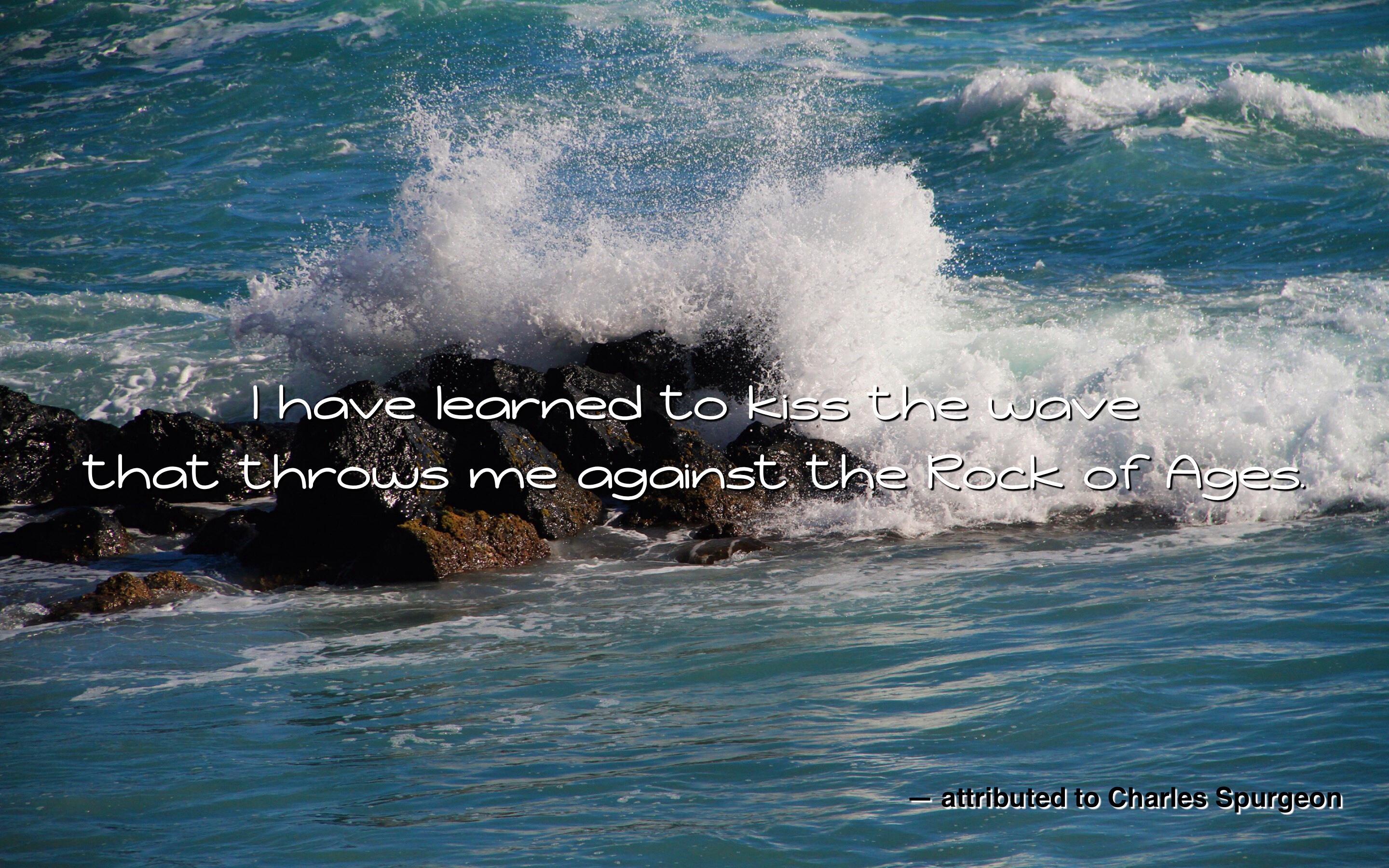


 Prone to wander...